
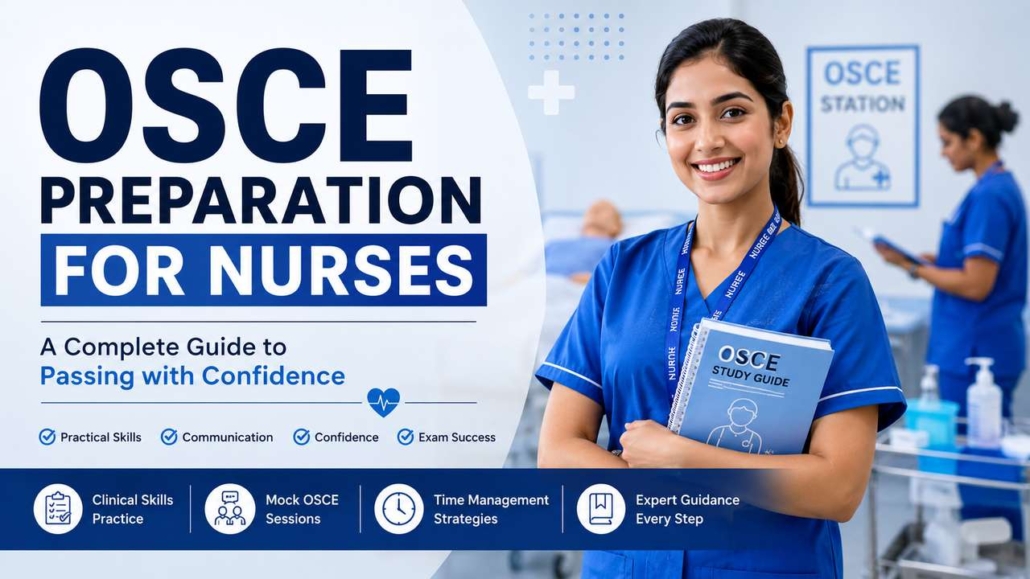
OSCE Preparation for Nurses: A Complete Guide to Passing with Confidence
The United Kingdom continues to be one of the most popular destinations for nurses looking for better career opportunities, professional growth, and international work experience. To work as a registered nurse in the UK, internationally educated nurses must successfully complete the Objective Structured Clinical Examination (OSCE).
For many candidates, the OSCE can feel challenging because it tests practical nursing skills, communication abilities, and professional decision-making in real-life clinical situations. However, with the right preparation and practice, passing the exam is completely achievable.
In this guide, we will discuss the most effective OSCE preparation for nurses and share practical OSCE preparation tips that can help you approach the exam with confidence.
Understanding the OSCE Exam
Before starting your preparation, it is important to understand what the OSCE exam is and why it is required.
The OSCE is a practical examination designed to assess whether a nurse can safely and effectively provide patient care according to UK healthcare standards. During the exam, candidates move through different stations where they perform specific nursing tasks while being observed by examiners.
These stations may include patient assessments, medication administration, communication scenarios, infection prevention procedures, and other essential nursing skills.
Unlike written exams, the OSCE focuses on how well you apply your knowledge in practical situations.
Why Proper OSCE Preparation Matters
Many nurses underestimate the importance of structured preparation. While clinical experience is valuable, the OSCE follows specific guidelines and assessment criteria that candidates must meet.
Good OSCE preparation for nurses helps you:
- Understand the exam structure
- Improve clinical performance
- Build confidence
- Reduce exam anxiety
- Avoid common mistakes
- Manage time effectively during stations
The more familiar you are with the exam process, the more comfortable you will feel on exam day.
Also Read This: Why OSCE Training is Crucial for International Nurses Moving to the UK
Start with the OSCE Blueprint
One of the most important OSCE preparation tips is to review the official exam blueprint and guidelines provided by the testing authority.
The blueprint outlines the skills, procedures, and competencies that may be assessed during the examination. It serves as a roadmap for your preparation and helps you focus on the areas that matter most.
Instead of trying to study everything at once, use the blueprint to create a structured study plan and prioritize key nursing skills.
Focus on Core Clinical Skills
The OSCE evaluates practical nursing abilities, so developing strong clinical skills should be a major part of your preparation.
Candidates should spend time practicing essential nursing procedures such as:
- Measuring vital signs
- Patient assessment
- Infection prevention and control
- Medication administration
- Documentation
- Patient education
- Safe communication techniques
Regular practice helps improve accuracy, speed, and confidence. The more often you perform these skills, the more natural they become during the exam.
Develop Strong Communication Skills
Communication plays a significant role in every OSCE station. Examiners assess not only what you do but also how you interact with patients.
Many candidates focus heavily on technical skills and forget that effective communication is equally important.
When speaking with patients, remember to:
- Introduce yourself clearly
- Explain procedures in simple language
- Maintain professionalism
- Listen carefully to patient concerns
- Show empathy and respect
- Confirm patient understanding
Good communication creates a positive patient experience and demonstrates safe nursing practice.
Practice Under Timed Conditions
One of the biggest challenges during the OSCE is time management.
Most stations have a strict time limit, and candidates must complete tasks within the allocated time. Even nurses with strong clinical knowledge can struggle if they are unable to manage their time effectively.
A useful strategy is to recreate exam conditions during practice sessions. Use a timer and perform procedures exactly as you would during the real examination.
This approach helps you become comfortable working under pressure while improving your speed and efficiency.
Learn from Mock OSCE Sessions
Mock examinations are one of the most valuable tools for OSCE preparation for nurses.
A mock OSCE allows you to experience the exam environment before the actual test. It helps identify strengths and weaknesses while providing an opportunity to improve performance.
During mock sessions, focus on:
- Following correct procedures
- Communicating effectively
- Managing time
- Handling unexpected situations
- Remaining calm under pressure
Feedback from experienced educators or mentors can help you correct mistakes and improve your overall performance.
Understand Infection Prevention and Patient Safety
Patient safety is at the heart of nursing practice, and it is a key area assessed during the OSCE.
Candidates must demonstrate safe and professional behavior throughout every station.
This includes:
- Proper hand hygiene
- Correct use of personal protective equipment (PPE)
- Safe medication practices
- Accurate patient identification
- Risk assessment
- Infection control procedures
Examiners pay close attention to these details because they directly impact patient care and safety.
Stay Calm and Manage Exam Anxiety
Feeling nervous before the OSCE is completely normal. In fact, many candidates experience anxiety regardless of their experience level.
One of the most practical OSCE preparation tips is to develop techniques for staying calm during the exam.
Simple strategies include:
- Deep breathing exercises
- Positive self-talk
- Adequate sleep before the exam
- Regular practice sessions
- Maintaining a healthy study routine
Confidence comes from preparation. The more prepared you are, the less anxious you will feel on exam day.
Create a Consistent Study Plan
Successful candidates usually prepare over several weeks rather than trying to learn everything at the last minute.
A well-organized study plan should include:
- Daily skill practice
- Review of clinical guidelines
- Communication exercises
- Mock OSCE sessions
- Self-assessment and revision
Consistency is far more effective than long, exhausting study sessions. Even a few focused hours each day can make a significant difference over time.
Common Mistakes to Avoid
During OSCE preparation, many candidates make avoidable mistakes that can affect their performance.
Some common mistakes include:
- Ignoring communication skills
- Poor time management
- Inadequate practice
- Skipping mock exams
- Forgetting infection control steps
- Rushing through procedures
- Not reviewing official guidelines
Being aware of these mistakes can help you avoid them and improve your chances of success.
Ready to Pass the OSCE with Confidence?
Preparing for the OSCE exam requires more than just clinical knowledge. Candidates need the right guidance, practical training, and a clear understanding of what examiners expect during each station.
At Global NextGen Pro, we are committed to helping nurses prepare confidently for their OSCE journey. Our support focuses on building strong clinical skills, improving communication techniques, and helping candidates become familiar with real-world exam scenarios.
Whether you are an internationally educated nurse planning to work in the UK or preparing for your next step in professional registration, structured guidance can make a significant difference in your preparation process.
With the right approach, consistent practice, and expert support, nurses can improve their confidence and perform effectively during the OSCE examination.
Frequently Asked Questions (FAQs)
What is the OSCE exam for nurses?
The Objective Structured Clinical Examination (OSCE) is a practical exam that assesses a nurse’s ability to provide safe and effective patient care. It evaluates clinical skills, communication, professional behavior, and decision-making in simulated healthcare scenarios.
How long should I prepare for the OSCE exam?
Preparation time varies for each candidate. Most nurses spend between four and twelve weeks preparing, depending on their experience level, clinical background, and familiarity with the exam format.
What are the most important OSCE preparation tips?
Some of the most effective OSCE preparation tips include practicing clinical skills regularly, improving communication abilities, reviewing clinical guidelines, attending mock exams, and managing time effectively during practice sessions.
Is the OSCE difficult to pass?
The OSCE can be challenging because it assesses practical performance rather than theoretical knowledge alone. However, candidates who prepare consistently and practice under exam-like conditions often perform well and pass successfully.
What skills are tested in the OSCE exam?
The exam commonly tests patient assessment, infection prevention and control, medication administration, communication skills, documentation, patient education, and professional nursing practice.
Can international nurses pass the OSCE on their first attempt?
Yes. Many internationally educated nurses pass the OSCE on their first attempt through structured preparation, regular practice, and a clear understanding of the exam requirements.
How can mock OSCE sessions help?
Mock OSCE sessions help candidates experience the exam environment before test day. They improve confidence, identify weaknesses, strengthen time management skills, and provide valuable feedback for improvement.
Where can nurses get support for OSCE preparation?
Nurses can seek guidance through professional training providers, study groups, mock examinations, online learning resources, and dedicated preparation programs such as those offered by Global NextGen Pro.

